· Nadia Rahman
Do you need a shoulder rest for violin?
This is one of the oldest arguments among violinists, and plenty of confident advice online pretends there is a single right answer. There is not. As a teacher, I fit rests on most of my students and take them off a few, and both groups play beautifully. This piece lays out the case on each side so you can decide, rather than following whoever shouted loudest.
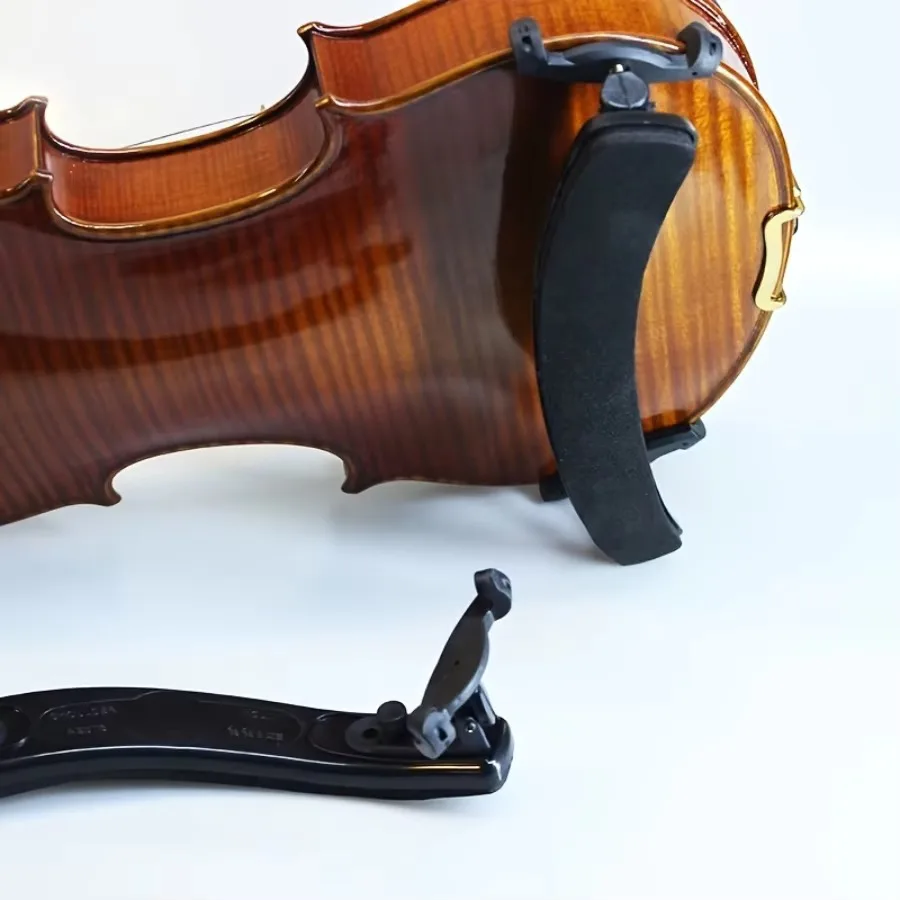
The rest versus restless debate
Shoulder rests only became common in the second half of the twentieth century, so for most of the violin's history nobody used one, and superb music was made restless. Today, some celebrated soloists still play without a rest while most orchestral and student players use one. That history matters because it kills the idea that a rest is either mandatory or a crutch. It is a tool, and like any tool it fits some hands and not others. The useful question is not whether the greats used one, but whether one helps you hold the violin with a relaxed shoulder.
The case for a rest
For most learners and returning adults, a rest removes a whole category of difficulty. Instead of learning to balance the violin and finger and bow all at once, the rest handles the balancing so you can focus on playing. It is especially helpful for anyone with a longer neck, where the gap to fill is bigger. It also encourages the shoulder to stay down rather than clenching upward, which is the posture habit most linked to strain. Our guide on using a shoulder rest for posture covers how to set one so it delivers those benefits.
of string players report pain in the shoulder, hand or fingers at some point, which good support helps prevent
— Fishbein et al., ICSOM survey of 4,025 musicians, 1988
The case for playing restless
Restless playing is a real, respectable choice, not a dare. Some players feel freer without a rest, moving the violin more fluidly and staying in closer contact with the instrument. A few prefer the resonance of a violin whose back is not clamped. Players with short necks often find any rest lifts the violin too high, forcing the head to press down, which defeats the purpose. For them a thin pad, a folded cloth, or nothing at all can be more comfortable than a rest. If you feel more relaxed without one, that is a legitimate answer, and no method book overrides your own shoulder.
Why your neck usually decides it
The most practical predictor is the distance from your jaw to your collarbone, sometimes called the ear-to-neck measurement. Research on shoulder rests found they relieve tension most for violinists with a longer such measurement, which is exactly the group with the biggest gap to fill. If you have a long neck, a rest is very likely to help. If you have a short neck, you may need only a thin pad, or none. This is why blanket advice fails: the right answer is written on your own body.
daily elevated-arm playing above which neck and shoulder pain rises in orchestra musicians, so comfortable support matters more the more you play
— Work postures and neck-shoulder pain among orchestra musicians, Am. J. Ind. Med., 2007
How to try both fairly
Give each setup a real trial, not thirty seconds. Play restless for a few days, noticing whether your shoulder stays down and your left hand feels free. Then fit a rest properly, following our setup guide and sizing guide, and play with it for a few days at the right height. The better option is usually obvious once your body has voted. Because a decent adjustable rest is inexpensive and ours comes with a 30-day money-back guarantee, trying one costs you nothing but a week. If you decide you want a rest, our buyer's guide helps you choose, and our reviews show how real players got on with it.
More reading: violin versus viola rests, how we test, and about Cadenza.
Questions
Is it OK to play violin without a shoulder rest?
Yes. Many players, including some famous soloists, play restless, and it is a valid choice. It tends to suit shorter necks and those who prefer direct contact with the instrument. It is not a sign of doing it wrong, and it is not automatically better either.
Do beginners need a shoulder rest?
Most beginners are more comfortable with one because it removes the job of holding the violin up while they learn everything else. Starting with a rest is a reasonable default, and you can always experiment with restless later once your setup is stable.
Does a shoulder rest affect violin tone?
Some players feel a rest slightly dampens resonance because it clamps the back, while others hear no difference. The effect is small and personal. For most learners, the comfort and posture benefits outweigh any tonal change, but it is worth trying both to hear for yourself.
Who should not use a shoulder rest?
Players with short necks who find a rest lifts the violin too high, and those who genuinely play more freely without one, may prefer restless or a thin pad. If a rest forces your shoulder up rather than letting it relax, that is a sign it may not suit you at its current setting, or at all.
Free shipping · 30-day money-back guarantee